HTC Vive Eagle Smart Glasses: A More Private Alternative to Meta's Ray-Ban Glasses
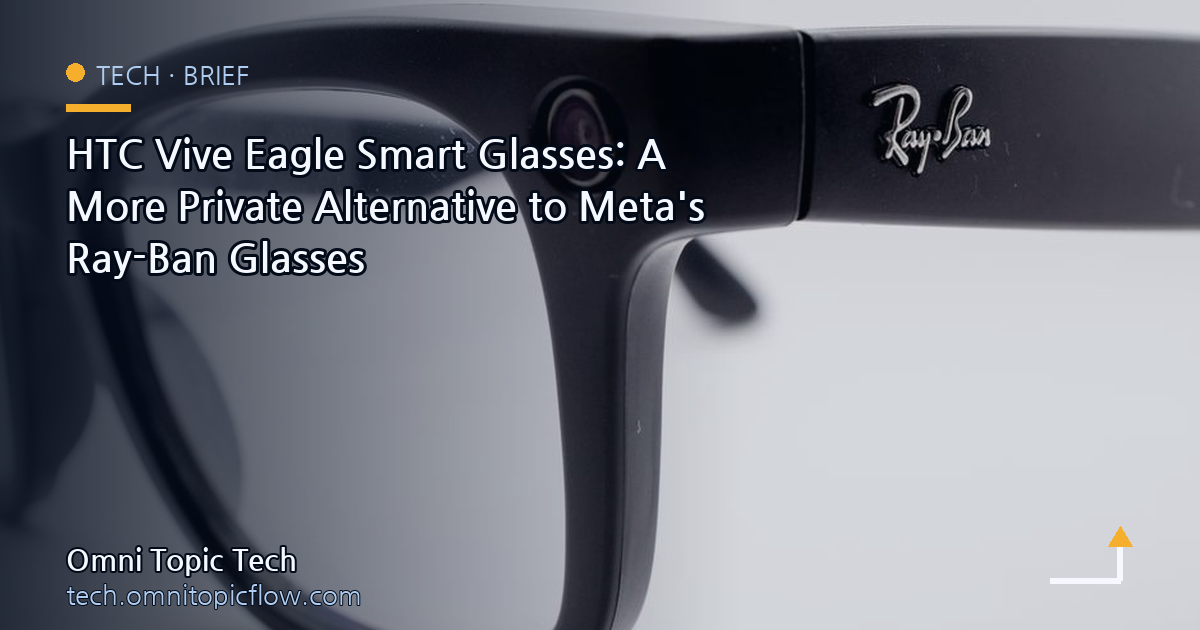
HTC has built smart glasses, the Vive Eagle, that cover most of what Meta's camera glasses do without being tied to a social media platform. That single design choice puts privacy, not just specs, at the center of the pitch. It also tests whether buyers want AI glasses that aren't an extension of a social network.

What HTC is offering
The Vive Eagle follows the template Meta popularized with its Ray-Ban glasses: a camera, microphones and speakers built into a normal-looking frame, paired with an AI assistant you can talk to hands-free. You can capture photos and video and ask questions about what you're looking at or hearing.
The difference is the company behind it. HTC is primarily a hardware maker and does not run a social network or an ad network. Meta's glasses are built around a Meta account and the Meta AI app, so they sit inside a platform that also runs Facebook and Instagram. HTC's pitch is that you get the same category of device without that attachment.
Why privacy is the selling point
Smart glasses are a sensitive product category because the sensors point outward. The wearer consents to the device, but the people around them have not. A phone has to be held up and is obvious. Glasses can record while looking like ordinary eyewear.
Meta has faced scrutiny over how its glasses handle AI features and voice data, including settings changes in 2025. That history is the opening HTC is going after. A device from a company with no social graph and no advertising business removes one obvious worry: that what the glasses capture might feed a broader profile tied to your social accounts.
What "not tied to a platform" does and does not mean
It is worth being precise here. Decoupling from a social network is not the same as full privacy. Several questions remain regardless of brand:
- Where the AI assistant's processing happens, on the device or on a remote server
- How long photos, video and voice clips are stored, and by whom
- Which third-party AI services receive your queries
- How clearly the glasses signal to bystanders that they are recording
HTC's published privacy policy and product documentation are where those answers need to be checked. A company's business model is a reasonable signal, but not a guarantee.
The competitive picture
The market is crowding quickly. Meta has the early lead with its Ray-Ban line, and Google and Samsung have signaled their own Android-based eyewear efforts. In that context, HTC is carving out a niche rather than trying to beat Meta on scale.
HTC has history here: its Vive headsets made it a known name in VR, and it has been looking for a durable place in wearables since stepping back from smartphones. A privacy-forward positioning is a plausible way for a smaller player to stand out, since it does not require out-spending Meta on ecosystem or marketing. That is an inference from the strategy, not something HTC has stated.
Who this matters to
Consumers gain a real choice. If the main objection to Meta glasses was the account and data relationship rather than the hardware, this is the first credible alternative worth comparing.
Developers and AI companies should note that the assistant layer on glasses is still open territory. Devices not locked to one platform may be more willing to integrate multiple AI services.
Regulators and privacy advocates will keep watching a category where bystander recording is the core issue, regardless of who makes the device. Expect recording indicators and clear disclosure to become standard talking points.
Takeaway
The Vive Eagle shows that smart glasses are moving from a gadget race into a trust race. Matching Meta's features is now the baseline. What will decide buyers is who handles the data, how transparent that handling is, and whether the glasses respect the people standing next to the wearer. HTC has chosen its position; real-world data practices will determine whether it holds up.
Reference: https://www.wired.com/story/htc-wants-its-vive-eagle-smart-glasses-to-be-the-anti-meta/


Comments
Post a Comment
Please read our comment policy before commenting.