Warhound: Palmer Luckey and Ben Lamm's Startup for Genetically Enhanced Military Dogs
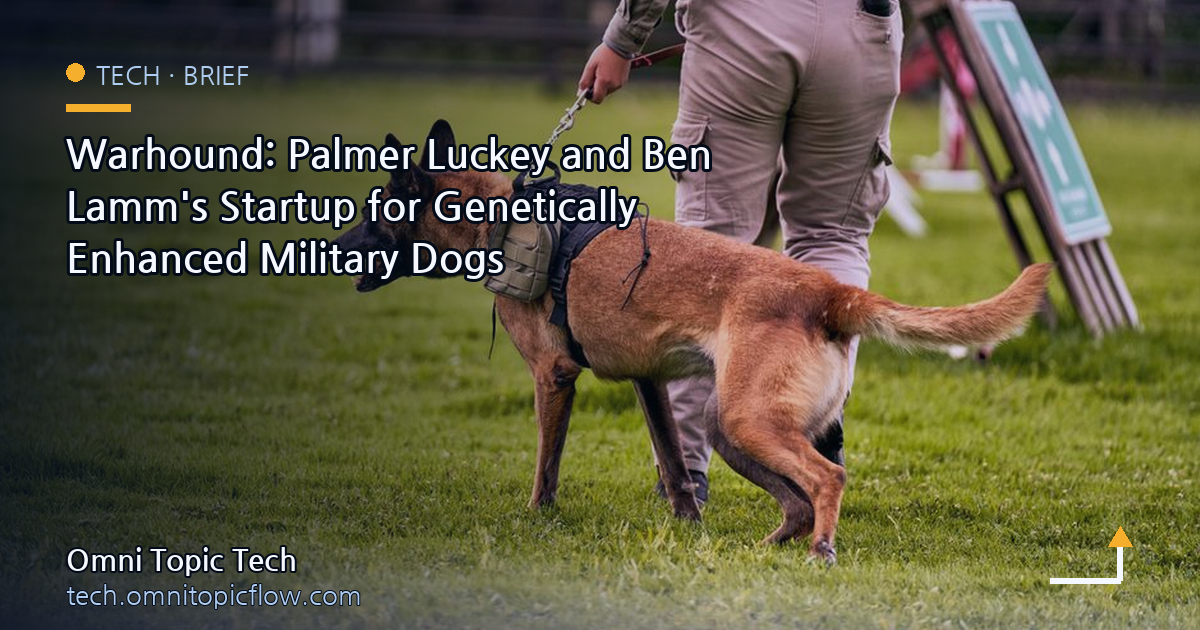
A new Texas-based defense startup called Warhound plans to genetically modify military and police dogs and outfit them with technology from Anduril. It was started by Anduril founder Palmer Luckey and Ben Lamm, co-founder of Colossal Biosciences, the company known for its de-extinction projects. The pairing puts a defense-tech company and a gene-editing company behind the same animal-focused venture. Many details, including which traits will be edited and what hardware the dogs will carry, have not been made public.

What Warhound says it will do
Warhound is positioned as a defense startup focused on working dogs in the United States, both military and police. The pitch has two parts: change the animals genetically, and equip them with military technology developed by Anduril.
That is a bigger claim than it first sounds. Most defense startups sell software, sensors, drones or munitions. Warhound proposes to treat a living animal as the platform.
The two people behind it
Palmer Luckey founded Oculus, the VR company later sold to Facebook, and then started Anduril in 2017. Anduril builds autonomous systems and sensors for military customers, tied together by its Lattice software platform.
Ben Lamm co-founded Colossal Biosciences, which markets itself as a company working to bring back extinct species. In 2025 it announced animals it described as dire wolves, produced by editing gray wolf cells and using dogs as surrogates. Scientists disputed whether those animals can truly be called dire wolves, but the work did show Colossal can edit and reproduce canids.
Warhound looks like the point where those two skill sets meet: canine gene editing from Colossal, and the hardware and defense-contracting experience of Anduril. That reading is an inference from the founders' track records, not something either company has spelled out.
How working dogs are supplied today
US military working dogs are typically Belgian Malinois, German Shepherds and similar breeds. The Department of Defense's main training pipeline is based at Joint Base San Antonio-Lackland in Texas, and many of the dogs are sourced from European breeders. Selecting a dog with the right drive, scent ability and health is slow, and not every candidate makes it through training.
If Warhound's approach works, the appeal is obvious: more consistent animals, less reliance on selection and import, and a tighter link between dog and equipment. Whether editing can deliver that, and which traits are even realistic targets, is unproven. Behavior and trainability are shaped by many genes and by environment, which makes them much harder to engineer than a single visible trait.
Questions that will decide whether this goes anywhere
Animal welfare. Designing an animal's body for a combat or police role will draw scrutiny from welfare groups and from the public. Questions about health outcomes, lifespan and what happens to dogs after service will likely come early.
Regulation. Genetically modified animals face review by US regulators, and use by government agencies adds procurement rules on top. Whether the military or police departments would buy such animals is not yet known.
Technical credibility. Colossal has produced headlines, but critics have questioned how much its announcements reflect real scientific milestones. Warhound will be judged on concrete data: which edits, what measurable performance gains, and what independent verification.
Contracting path. Anduril itself grew from a startup into a major Pentagon supplier, so there is precedent for a Luckey-founded company winning defense work. A venture built on live animals is a different kind of product, and it would face a harder road than software or hardware.
Takeaway
Warhound is, for now, an announced plan rather than a demonstrated capability. The founders' backgrounds make it more than a stunt in terms of resources and access, but the specifics on genetics, equipment and customers are what will show whether it is viable. The ethical and regulatory debate is likely to arrive before any dog is deployed.
Reference: https://www.theverge.com/tech/1017343/warhound-palmer-luckey-anduril-colossal-war-dogs


Comments
Post a Comment
Please read our comment policy before commenting.