Why Some US Restaurants Are Getting Rid of Tipping (No-Tip Policy Explained)
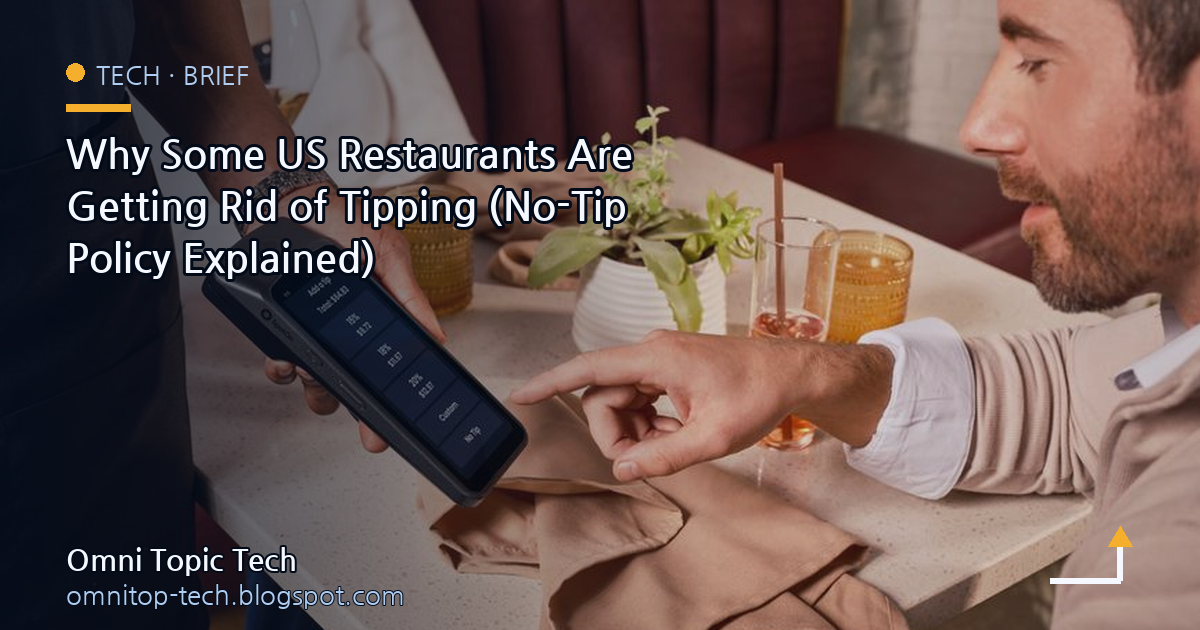
A growing number of US restaurants are ditching tipping altogether, folding labor costs directly into menu prices instead. San Francisco's La Cigale is one of the latest examples: a fixed $140 per person, no tip expected, with wine staff paid a guaranteed $40 an hour. The move reflects a longer-running debate in American dining over whether tipping is still a fair way to pay restaurant workers.

What's happening
At La Cigale in San Francisco, diners pay a flat $140 per person for a set menu and nothing more — no tip line, no percentage math at checkout. The restaurant instead pays its wine staff a fixed $40 hourly wage, regardless of how busy the night is or how generous customers feel. The pitch to diners is simple: the price on the menu is the price you pay.
Background: why tipping is under pressure
Tipping has long been the backbone of server pay in the US, often making up the majority of a front-of-house worker's income. But it comes with structural problems. Earnings swing wildly with foot traffic, season, and even a customer's mood, making income unpredictable for workers who rely on it to pay rent. It also creates a pay gap between tipped servers and untipped kitchen staff who often work just as hard for far less.
These cracks have been visible for years. Restaurateurs like Danny Meyer experimented with no-tipping models at his Union Square Hospitality Group restaurants back in 2015, building service charges into menu prices to standardize pay. Some of those experiments were later reversed due to staff and customer pushback, but the underlying cost pressures haven't gone away — if anything, post-pandemic inflation in labor and food costs has made the case for predictable wages stronger.
Why it matters
This isn't just a pricing gimmick — it's a labor economics question playing out restaurant by restaurant. For workers, a guaranteed hourly wage means stable income independent of customer generosity or slow nights. For owners, baking labor costs into the menu price makes staffing costs easier to forecast and budget around, rather than being at the mercy of tip fluctuations.
For diners, the appeal is transparency: no awkward tip-percentage calculations, no guilt over under-tipping, no surprise final bill. But there's a trade-off — menu prices look higher upfront, even if the total amount paid ends up similar to what a tip-inclusive bill would have been. That psychological difference matters in a market where customers are used to seeing


Comments
Post a Comment